Hair
Hairstyle by Hair Texture
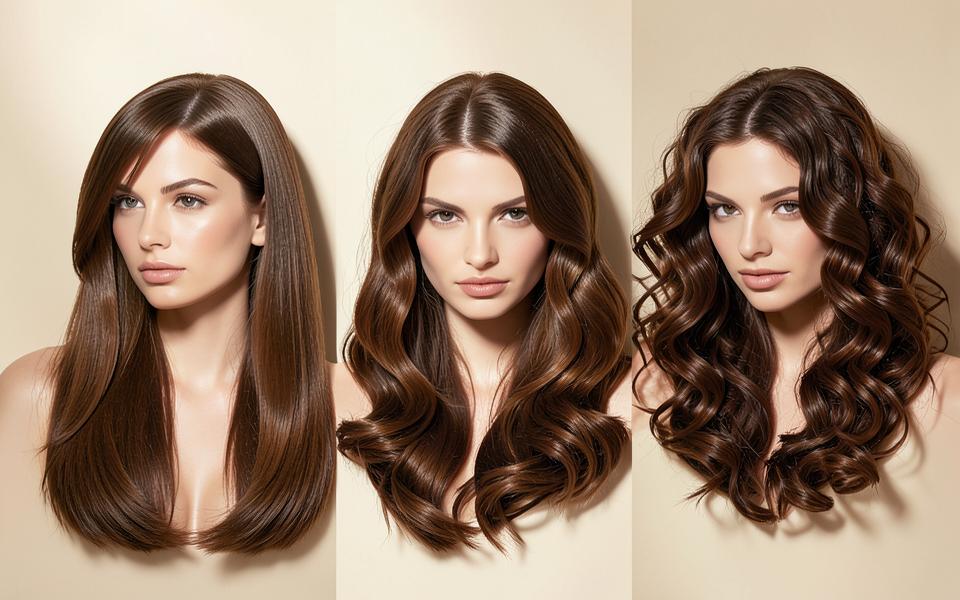
Face shape tells you which line suits you. Hair texture tells you whether that line is achievable without daily blow-drying. When these two pieces of information line up, a hairstyle looks good even on day two — without any tools.
Identify your texture in 30 seconds
- Wash your hair, apply no product, and let it air-dry.
- Look at the shape: straight, gently wavy (S-shape), pronounced wave, curl.
- Take a single strand and examine it: thin as silk = fine; you can feel it between your fingers = medium; thick and firm = coarse.
- Grab a ponytail: a slim circumference = lower density; a thick one = high density.
Fine hair
- Work well: a blunt cut, bob and lob, shoulder-length, a single layer around the face.
- Avoid: heavy layering and excessive thinning — the ends become see-through.
- Volume comes from the cut, not from products: a straight line looks denser.
Thick hair
- Work well: long layers, internal thinning, longer lengths that carry the weight.
- Avoid: a short blunt bob without layers — it spreads into a triangle shape.
- Ask for the weight to be removed from the inside while the visible line stays clean.
Wavy and curly hair
- Work well: dry cutting, layers shaped to the curl pattern, length below the shoulders.
- Avoid: a straight line to the chin — on curls it behaves like a triangle.
- Account for shrinkage: curls can shorten by 5–10 cm once dry.
Match texture with face shape
When texture and face shape call for opposite things — for example curly hair and a round face — texture wins, and you handle the proportion through length and parting. The guide which hairstyle suits me best covers the line by face shape, and bangs are covered in more detail in bangs by face shape.
The seven strands around the face change the look of a hairstyle more than any product. If you're unsure about a big change, start there.
Frequently asked questions
Can I have long hair if it's fine?
You can, but length uses up visible density. If you want longer than elbow-length, keep the ends blunt-cut and trim them regularly.
Do layers always add volume?
No. On thick hair they remove weight, while on fine hair they can reduce volume because the ends end up sparse.
Should curly hair be cut dry or wet?
Dry is more predictable — the stylist sees exactly where each curl falls and how much the cut will shrink.
In closing
Texture and density first, then length, then layers. When the cut suits your hair, the hairstyle maintains itself — and you adjust the face shape through parting and the strands around the face.
Related reading
Bangs by Face Shape
Bangs change facial proportion the fastest — and are the hardest to grow out. That's why they should be chosen by face length, not trend.
How to Explain to Your Hairdresser What You Want
The most common reason for salon disappointment isn't the hairdresser — it's that "short" and "trim a little" mean two different things.
How AI Recommends a Hairstyle That Suits You
A hairstyle isn't a matter of trend but of proportion. That's why the recommendation can be explained with numbers.
Main guides