AI beauty
AI Beauty Analysis vs Magazine Quiz: Which Is More Accurate?
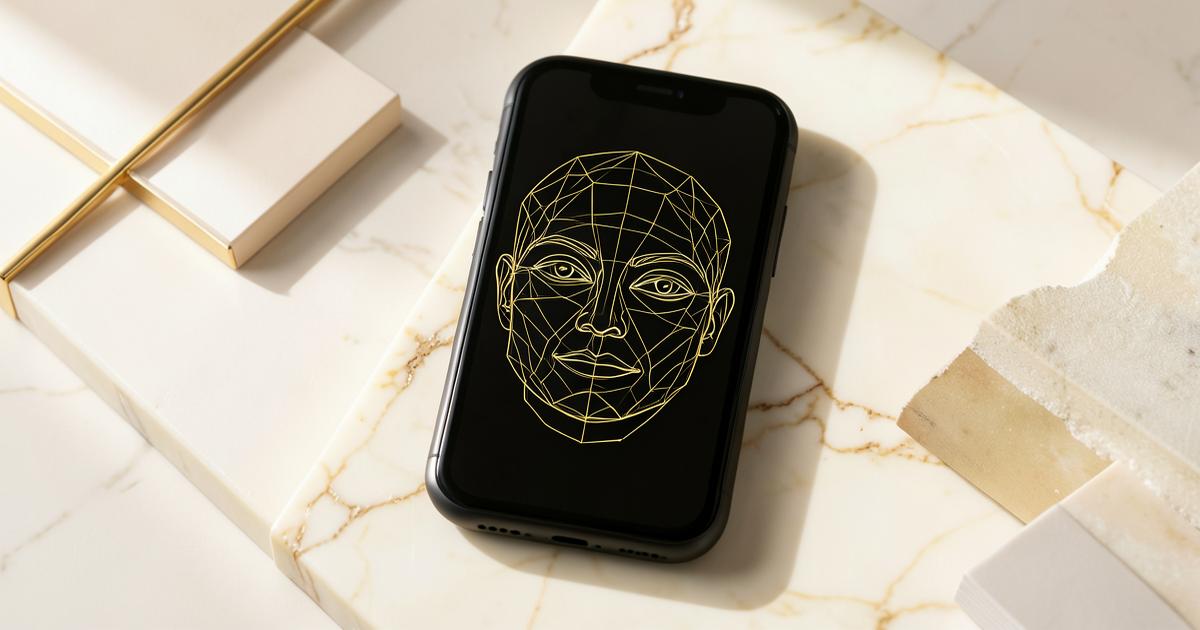
We’ve all been there: eagerly completing a quiz in our favourite magazine, only to end up with recommendations that don't suit us at all. Questions such as 'do your veins look blue or green?' or 'is your face shape oval or square?' rely entirely on your own subjective, and often biased, self-assessment. When evaluating AI beauty analysis accuracy, the results are grounded in precise mathematical pixel measurements and contrast detection, replacing personal guesswork with objective, personalised aesthetics. In this guide, you’ll discover exactly how both methods work and why digital detection delivers incomparably more reliable beauty insights.
How a classic magazine quiz works and where errors happen
Multiple-choice questions (the classic A, B, C, or D system) are designed to be extremely broad to cover a vast audience. For instance, answer A might classify you as a 'warm spring', whilst answer B pushes you into 'cool summer'. In truth, human beauty rarely fits neatly into four rigid boxes. Most women have nuanced, neutral, or combination undertones that simple questionnaires must ignore to remain easy and quick to read.
Once your answers are tallied, a magazine quiz slots you into one of just a few generic buckets. The result is often far too generalised, leading to misguided choices when buying foundation, picking a new hair colour, or styling your wardrobe. In practice, you might buy a lipstick that seemed ideal based on quiz advice, only to realise at home that it washes you out because its undertone doesn't actually complement your skin.
How AI beauty analysis evaluates your facial features and skin tone
When you want to explore your morphology in depth, it helps to understand how AI beauty analysis works. The algorithm analyses specific light values, colour intensity, and the subtle contrast between your irises, natural lip hue, and skin tone. In doing so, artificial intelligence identifies your undertone without being influenced by personal mood, bias, or subjective self-image.
- Key facial landmark detection for calculating exact facial proportions
- Precise measurement of cheekbone width, forehead length, and jawline structure
- Pixel-level colour analysis to identify warm, cool, and neutral undertones
- Comparison of your unique parameters against thousands of reference aesthetic profiles
Subjective perception vs objective pixels: Why quizzes mislead us
Algorithmic software has no emotions, relies on no hazy memories, and cannot misinterpret words. It analyses pure visual data. Whilst a quiz asks you whether silver or gold jewellery 'looks better'—an entirely subjective choice influenced by personal habit—the algorithm measures how light actually reflects off your skin and maps that data onto an objective colour spectrum.
Comparing accuracy: Face shape, undertone, and style recommendations
When it comes to skin tone, traditional quizzes almost always overlook neutral undertones because they are difficult to capture through basic multiple-choice options. Yet neutral complexions are incredibly common and require a delicate balance when choosing cosmetics. To see how reliable these digital evaluations are in practice, learn more about how accurate AI undertone analysis is. The algorithm detects subtle tonal shifts, preventing those frustrating moments when a foundation turns orange or overly pink on your skin.
Furthermore, digital beauty recommendations take your hairline, eye depth, and feature density into account rather than just basic outline shapes. For flawless results, the only requirement is a good input photo, making it essential to capture a proper selfie without heavy makeup or harsh shadows.
Top Tip: Before running an AI analysis, remove all makeup and stand near a window with diffuse daylight. Avoid direct sunlight or artificial bathroom lights, which cast yellow or blue tints that can throw off even high-precision digital sensors.
When to take a magazine quiz and when to trust AI beauty analysis
On the other hand, AI beauty analysis is what you should rely on when making practical decisions that involve a financial investment or a lasting change to your look. When buying high-end foundation, building a capsule wardrobe, or committing to a major haircut, relying on a casual quiz carries a high risk of disappointment. Precise digital measurements give you total confidence that your chosen colours, cuts, and silhouettes will flatter your natural beauty.
The ideal approach blends both worlds: use magazine pop quizzes to spark your creativity and uncover trends you love, then use AI analysis as your technical filter to tailor those trends perfectly to your unique anatomy and facial proportions.
Frequently asked questions
Is AI beauty analysis always more accurate than a magazine quiz?
Yes. In terms of technical precision, AI analysis is vastly superior because it measures exact pixel proportions and contrast on a high-resolution photo, whereas quizzes rely on subjective, self-reported perception.
Why do magazine quizzes often give me the wrong colour palette?
Quizzes offer only a handful of broad categories and rely on simplified questions that fail to detect neutral or olive undertones, resulting in overly generalised and often incorrect recommendations.
Do I need a professional photograph for an AI analysis?
No professional equipment is needed. A clear selfie taken on a smartphone in indirect natural daylight, without makeup or digital filters, is completely sufficient.
Can the results of an AI analysis and a quiz ever match?
They can align if you have very distinct, classic facial features and prominent primary undertones that are easy to spot even without complex digital algorithms.
In closing
Magazine quizzes will always have a place for casual fun and style inspiration, but when making key decisions about your personal aesthetic, mathematics offers far more dependable guidance. AI analysis doesn't make assumptions—it objectively interprets the distinct visual cues your features and skin tone already express. By combining your personal taste with precise digital insights, you gain the confidence to refine a style that suits you effortlessly, without expensive mistakes.
Related reading
How Accurate Is AI Skin Undertone Analysis
Undertone is the one part of the analysis that depends on lighting more than on you. That's why accuracy starts before you even send the photo.
How AI Beauty Facial Analysis Works
AI doesn't "judge beauty." It measures proportions and colors, then derives recommendations you can verify in the mirror.
How to Take a Photo for AI Facial Analysis
AI doesn't see you — it sees your photo. That's why one bad light can change the whole result.
Main guides