AI beauty
How AI Beauty Facial Analysis Works
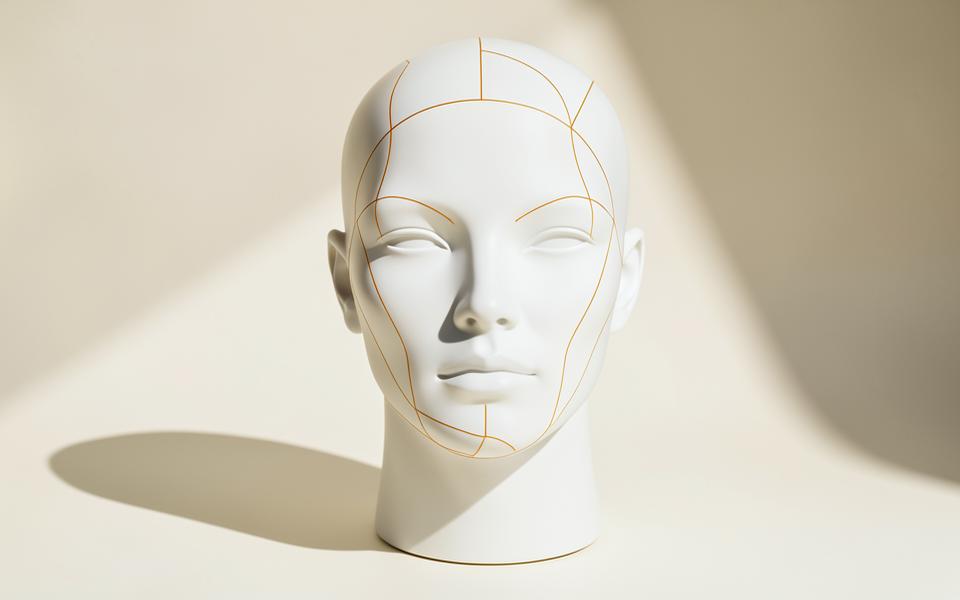
AI beauty analysis sounds magical until you see what's actually happening: the model reads a few measurable things from a photo, then matches them with styling rules stylists have used for decades. Here's the whole process, with no jargon.
What AI reads from the photo
- Face proportions: width of the forehead, cheekbones, and jaw, length of the face.
- Lines: whether the jaw is sharp or rounded, whether the forehead is straight or rounded.
- Skin undertone: whether the complexion shows a warm (yellow-golden) or cool (pink-blue) base.
- Eye color and hair color, plus the contrast between them and the complexion.
How a recommendation is formed
Measurements alone mean nothing until they're matched with rules. If the jaw is sharp and the face angular, the rule is that rounded lines (round glasses, teardrop earrings) soften the look — the same rule explained in detail in glasses by face shape. If the undertone is warm, the palette shifts toward sand, olive green, and amber, as in the guide your personal color palette.
Steps of the analysis
- Checking photo quality: light, angle, filters.
- Detecting the face and key points (eyes, nose, jawline).
- Calculating proportions and classifying the face shape.
- Analyzing skin color across several zones to assess undertone.
- Combining everything into a report: palette, hairstyle, eyebrows, glasses, makeup.
What AI can't do
- It doesn't know how you dress or what you like — that remains your decision.
- It doesn't see hair texture in motion, only in the photo.
- It can't make up for a bad photo: yellow light shifts the undertone.
- It doesn't judge beauty, because that isn't measurable.
If the result doesn't match how you see yourself, check the photo first. In 9 out of 10 cases, the issue is the lighting, not the analysis.
Frequently asked questions
Does AI analysis replace a stylist?
No. It gives you an accurate foundation — face shape, undertone, palette — while a stylist (or you) decides how to apply that to a specific situation.
How accurate is the undertone assessment?
It's as accurate as the fidelity of the light in the photo. Daylight by a window gives the most stable result.
Do I need makeup on for the photo?
No. Foundation in the wrong shade is the most common reason for a misjudged undertone.
In closing
AI beauty analysis is measurement plus styling rules — nothing mystical. That's exactly why it's verifiable: you try the recommendation in the mirror and see whether the lines and colors work for you.
Related reading
How to Take a Photo for AI Facial Analysis
AI doesn't see you — it sees your photo. That's why one bad light can change the whole result.
How Accurate Is AI Skin Undertone Analysis
Undertone is the one part of the analysis that depends on lighting more than on you. That's why accuracy starts before you even send the photo.
What Happens to Your Photo in AI Analysis
A photo of your face is sensitive data. It's worth knowing why it's requested, where it's stored, and what you're allowed to ask.
Main guides