Hair
How to Choose the Best Hair Parting for Your Face Shape
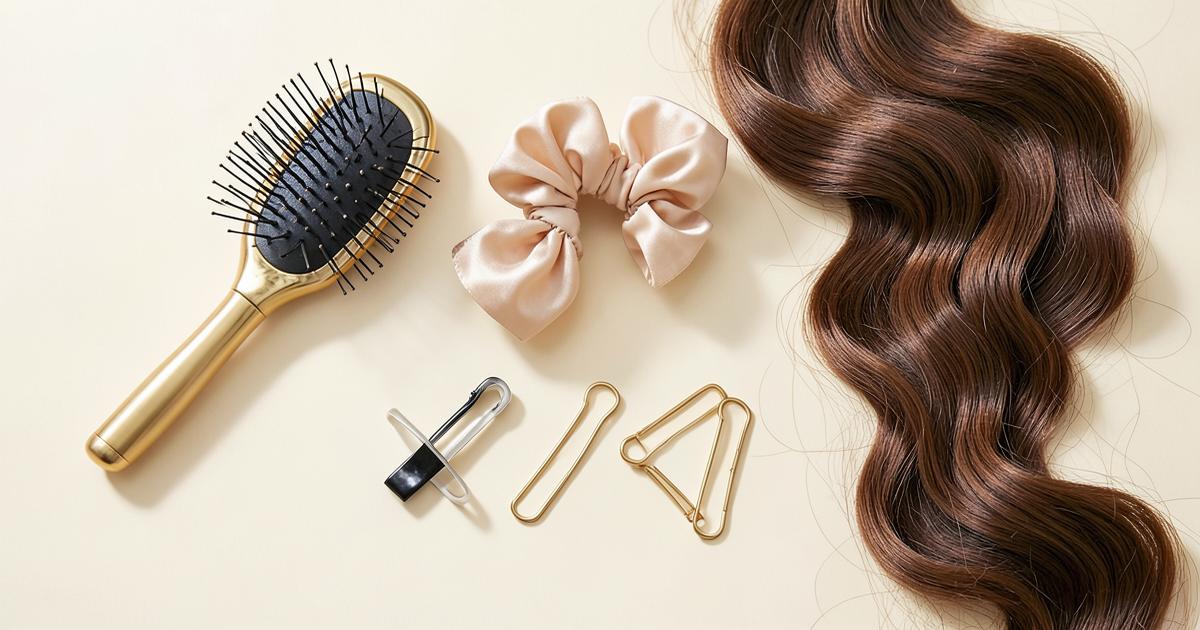
Sometimes the simplest trick to refresh your look costs nothing at all and requires no trip to the salon. Finding the best hair parting for your face shape has the power to instantly soften a strong jawline, visually elongate rounder features, or create the illusion of thickness where hair is fine. By understanding your facial geometry, you can flatter your best assets with just one sweep of a comb before blow-drying.
Why Your Hair Parting Alters Facial Symmetry
Shifting your parting line allows you to rebalance your proportions without using scissors. For example, a deep side part creates a sweeping diagonal that breaks up a broad forehead and softens a square jawline, whereas a sharp middle part emphasises nose length and eye symmetry. If you want to confirm your exact proportions first, you can read our guide on how to measure your face shape before choosing your ideal style.
Beyond aesthetics, your hair has its own natural growth direction, known as a crown swirl or root angle. When deciding where to place your parting, it is essential to consider how your hair naturally wants to fall. Working against a strong cowlick can yield instant root lift, but it requires precise heat styling and setting to stay in place.
The Centre Parting: Who Does a Middle Part Really Suit?
This style is most flattering on oval and heart-shaped faces, as it complements balanced proportions and brings high cheekbones into focus. For a round face shape, a middle part can also work beautifully, provided the hair falls past the shoulders with soft face-framing layers. This creates vertical curtains that visually slim the face.
If your face is elongated or rectangular, a sleek middle part with dead-straight hair can make your profile appear longer. In this case, adding soft lateral waves around ear height provides flattering width.
- Try it if you have an oval face or a heart-shaped structure with defined cheekbones.
- Avoid poker-straight hair pinned flat to the scalp if your face is long or narrow.
- Pair a centre line with soft curtain waves to break up harsh geometric lines.
The Side Parting: A Universal Fix for Balanced Features
For square, rectangular, and heart face shapes, a deep side parting is foolproof. The diagonal sweep of front layers softens a prominent jawline, visually narrows a broad forehead, and gives the face a softer silhouette. On round faces, a side part breaks up circular symmetry to create an elongating effect.
How do you select your best side? Look into a mirror in natural light and spot which eye is slightly larger or which cheekbone sits higher. Opening up that dominant side while letting hair gently veil the other creates an instantly refreshed, harmonious frame.
The Modern Zig-Zag Parting: Textured Volume and Root Disguise
This parting style is a brilliant solution for fine, thin, or flat hair. By crossing hair strands over from alternating sides, you conceal the scalp line and build tactile volume at the crown. Furthermore, a zig-zag line is a clever trick for disguising root regrowths between salon appointments.
Top tip: To create a soft zig-zag parting, use the tail of a comb to trace light, wavy strokes back from your hairline, then gently separate the strands with your fingers.
Facial geometry provides the blueprint, but your natural hair texture dictates how your parting will hold throughout the day. Straight hair requires more structure when parting, as flat lines can sometimes look limp. Incorporating a soft side sweep or a subtle zig-zag instantly adds much-needed body.
Hair Texture and Partings: Working with Your Natural Fall
On the other hand, wavy and curly hair naturally forgives slight imperfections and benefits from softer, less defined partings. The natural bounce of curls allows you to switch sides easily or wear a middle part without losing root volume. Read more about selecting a haircut for your hair texture to simplify your daily routine.
If your haircut features a fringe, your parting must complement its shape. Pairing curtain bangs with a soft side or centre line frames the eyes and cheekbones beautifully. For further inspiration, explore our guide on choosing fringe styles for your face shape.
How to Switch Your Hair Parting Without Causing Damage
After washing, apply a small amount of lightweight volumising mousse directly to the roots, then use a tail comb to set the new line. When blow-drying, direct warm air from root to tip along the new parting line using a paddle brush to lock the roots in place until fully cool.
- Gently towel-dry your hair to remove excess moisture without roughing up the cuticle.
- Draw your new, precise parting line whilst the hair is still damp.
- Apply a heat protectant and a light root-lifting spray or mousse.
- Blow-dry the roots using a nozzle attachment on medium heat, styling in the direction of the new line.
- Secure the new line with a flat setting clip for a few minutes until the hair cools completely.
Frequently asked questions
Does a centre parting suit a round face shape?
Yes, provided your hair falls below shoulder length and has gentle volume around the cheeks. This creates two subtle vertical lines that visually lengthen and slim the face.
How can I train my hair to switch to a new parting?
Style your new line whilst hair is still soaking wet. Blow-dry the roots in the new direction using a flat paddle brush, then secure the hair with a clip until it cools down completely.
Which hair parting gives the most volume and a youthful look?
A deep side parting instantly lifts the roots on the opposite side, creates flattering asymmetry, and gives your face a fresher, more dynamic look.
Does a zig-zag parting help hide root regrowths?
Yes, an irregular zig-zag line breaks up the straight scalp line, preventing harsh contrast and making regrowths or thinning areas far less noticeable.
How do I choose which side to part my hair on?
Look in the mirror and open up the side of your face with the slightly larger eye or higher cheekbone, letting your hair softly frame the other side for perfect balance.
In closing
Finding the right hair parting is a simple yet wonderfully effective way to enhance your natural features. Whether you opt for the timeless symmetry of a centre part, the playful texture of a zig-zag line, or the dramatic volume of a deep side parting, the key is balance. Experiment in front of the mirror and let your hair bring a fresh new dimension to your overall look.
Related reading
Bangs by Face Shape
Bangs change facial proportion the fastest — and are the hardest to grow out. That's why they should be chosen by face length, not trend.
Hairstyle by Hair Texture
The same haircut on fine and on thick hair is really two different haircuts. Texture decides how well the cut will hold.
Main guides