AI beauty
What AI Sees in Your Photo (That You Don't Notice)
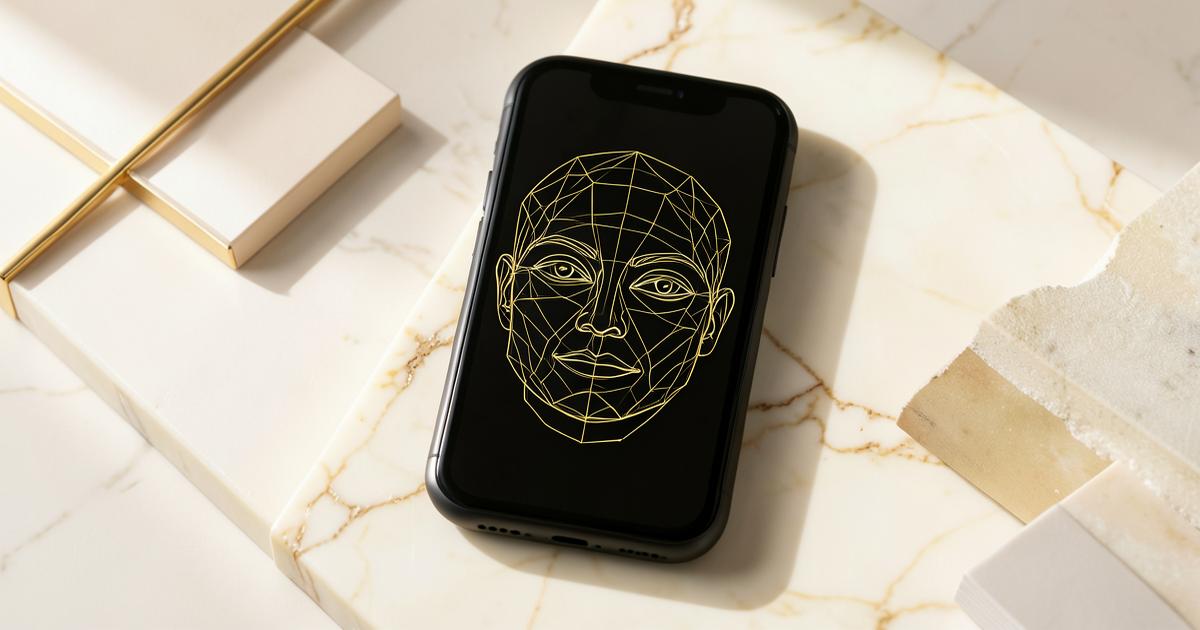
Every morning, you look in the mirror believing you know your own face inside out—every line, shadow, and feature. Yet the way your brain processes your reflection is shaped by cognitive bias and habits that conceal your true facial architecture. When an algorithm analyses a photo, it operates without personal insecurities or memories; instead, it measures precise micro-proportions, pixel-level tonal transitions, and contrast ratios that the human eye easily overlooks. Understanding these insights provides an objective view of your facial structure, helping you make tailored styling choices for makeup, hair, and frames. Here is what AI detects in your portrait and how you can use it to elevate your everyday look.
The Mirror Blindspot: Why We Can't See Our Own Face Objectively
Moreover, when standing before a mirror, our attention tends to scan localised details—a temporary blemish, eyebrow symmetry, or fine lines—rather than taking in full facial harmony. The brain merges these impressions into an image coloured by mood and confidence. In contrast, an algorithm evaluates the entire matrix of facial proportions simultaneously, free from emotional filters.
Achieving a truly objective self-assessment at home can be challenging. A properly prepared photo for AI facial analysis allows software to read clear structural data, unhindered by posing angles or subjective habits.
Micro-Proportions and Structural Balance Measured in Seconds
Traditional face shape classification often forces features into rigid categories such as 'oval', 'round', or 'square'. Advanced beauty algorithms recognise that few faces fit neatly into a single box. Instead, the software evaluates percentage overlaps between structural archetypes to reflect your unique bone framework.
- Vertical Thirds: The ratio between forehead height (hairline to brows), nose length, and the distance from the base of the nose to the chin. This balance informs which hair lengths, partings, or fringe styles best complement your features.
- Horizontal Fifths: Facial width divided into five equal eye-width segments, guiding the ideal width and scale for optical frames and brow shaping.
- Jawline Angle & Definition: The precise incline of the jaw, which determines lower-face visual weight and indicates the most flattering hair lengths.
- Cheekbone Spacing: The distance across the cheekbones relative to the temples and jawline, highlighting your face's natural focal balance.
Natural Facial Contrast: The Key to Refined Makeup Choices
High-contrast individuals (such as pale skin with dark eyes and hair) look striking in defined, vibrant lip and eye shades, whereas muted nude palettes can leave them looking washed out. Conversely, low natural contrast requires soft, blended transitions to prevent makeup from appearing overly harsh or heavy.
Low contrast features subtle tonal differences between skin, eyes, and hair, while high contrast presents clear boundaries between light and deep elements.
Pixel-Level Undertone Analysis: Seeing Beneath the Surface
Algorithms assess undertones at pixel level, extracting values from the colour spectrum beneath surface irregularities. By isolating subtle red, yellow, and blue sub-pigments, the system determines whether your true undertone is cool, warm, or neutral.
Knowing your exact undertone takes the guesswork out of beauty shopping. Understanding whether you suit a cool or warm undertone prevents purchasing foundation that looks orange, overly pink, or dull in daylight.
Texture and Contour Mapping: How Shadows Define Structure
While human vision blends these subtle gradient shifts into a single impression, digital processing breaks them down into precise highlights and contours. This reveals where your cheekbones naturally catch light for volume and where subtle shading creates clean definition.
This detailed mapping provides practical guidance for blush placement, highlighter, and contouring. Rather than following generic online tutorials, you gain insights tailored specifically to your natural anatomy.
Applying AI Insights for Effortless Personal Styling
Combining these insights with your hair stylist helps you choose cuts and layering that naturally balance your proportions. Furthermore, understanding how AI beauty analysis works helps you bypass fleeting trends that don't suit your morphological structure.
By replacing guesswork with precision, your beauty choices become confident investments. Your personal style is no longer at the mercy of poor fitting-room lighting or mirror fatigue, but grounded in celebrating your unique features.
Frequently asked questions
Why does my own perception of my face shape differ from the AI analysis?
Subjective self-assessment relies on dynamic angles, current hairstyles, and visual habits built over years. An AI algorithm measures precise mathematical distances between key facial landmarks without emotional bias or subconscious filtering.
How does AI detect my natural contrast if I'm wearing makeup in the photo?
For optimal accuracy, a fresh, makeup-free photo is ideal. However, subtle makeup can still be parsed as the algorithm isolates boundaries between your hairline, pupils, and bare skin patches to determine native contrast.
Can poor lighting alter the results of my analysis?
Yes, harsh shadows or overly warm, artificial light can skew pixel-level undertone evaluation. We recommend capturing your photo in even, indirect daylight for the most reliable outcome.
What does high or low facial contrast actually mean?
High contrast indicates a stark value difference between your skin, eyes, and hair (for instance, fair skin paired with deep dark hair). Low contrast means softer, more uniform tones that benefit from seamless blending.
Can I use these insights when choosing a new haircut or optical frames?
Absolutely. Understanding your facial vertical thirds and cheekbone-to-jawline proportions helps you select hair lengths, fringe styles, and frame shapes that beautifully balance your natural features.
In closing
Discovering what facial analysis reveals about your portrait isn't about altering your look—it is a clear guide to refining your personal aesthetic. Removing subjective visual biases leaves a true map of your natural beauty, providing a reliable foundation for choosing makeup, hair, and styling that suit you effortlessly.
Related reading
How AI Beauty Facial Analysis Works
AI doesn't "judge beauty." It measures proportions and colors, then derives recommendations you can verify in the mirror.
How to Take a Photo for AI Facial Analysis
AI doesn't see you — it sees your photo. That's why one bad light can change the whole result.
Main guides